Angelo Cappellini vs Smania vs Formitalia: what does the premium client choose and why
Updated: July 2026 | Exclusive facts from Italian sources: Federlegno Arredo, official manufacturers’ websites, industry publications
Three antipodes of Italian luxury, not merely “pillars”
Angelo Cappellini, Smania and Formitalia are not simply three factories with a “strong artisanal tradition.” They represent three fundamentally different approaches to luxury, three competing philosophies, three answers to the question: what is premium Italian furniture? A client who understands the difference will never buy from all three at once. They will choose one—the one that reflects their taste, lifestyle and values.
I personally know the owners of all three factories, and despite their seemingly similar marketing and similar approach to selecting clients—premium positioning, working through a limited circle of dealers, an emphasis on craftsmanship—each has a fundamentally different product philosophy: Angelo Cappellini recreates history, Smania creates bespoke haute couture, and Formitalia builds contemporary luxury through partnerships and materials. View the full catalogue of Italian manufacturers in the section “Factory Catalogue”, and the history of the development of the Italian furniture school—in the article “History of Italian Furniture: From Architecture to Design”.
Why exactly the early 2000s became a turning point
In the late 1990s, the Russian market for Italian furniture began to change noticeably. While in the first years after the borders opened, the Made in Italy label itself was the main selling point, by the beginning of the new millennium buyers had become far more discerning. Many had already visited Europe, seen the historic interiors of Italy and France, become acquainted with the work of renowned architects, and understood that classic furniture was not limited to a single style.
This change was particularly noticeable in furniture showrooms. While buyers’ attention had previously been drawn primarily to the most decorative models with abundant gilding, carving and intricate ornamentation, interest gradually began to shift towards furniture with more refined proportions and historically accurate forms. People began asking which period a particular model came from, how furniture from the Louis XV era differed from furniture of the Directoire or Empire periods, and why different factories had completely different approaches to classic style.
It was during this period that I visited Angelo Cappellini especially often. For me, this factory became a kind of benchmark, because they never tried to adapt to rapidly changing fashion. At the production facility, they spoke not about how to make furniture more striking, but about how accurately they had managed to convey the proportions of the historical original, how to select the veneer pattern, or how to achieve impeccable quality in hand carving.
I believe this was precisely Angelo Cappellini’s greatest strength. While many factories sought to attract attention through outward flamboyance, this company consistently developed its own understanding of classic style. Over time, it became clear that this very approach was the most sought-after. When Russian buyers learned to distinguish between styles and began to understand furniture more deeply, interest in Angelo Cappellini grew quite naturally.
This also aligned well with my own observations. In the early 2000s, we increasingly brought to Russia not the most lavish collections, but a more restrained, architectural classic style. It fitted better into contemporary homes, combined more easily with expensive materials and, most importantly, did not go out of fashion after just a few years.
Angelo Cappellini. When classic style ceases to depend on fashion
1886, Brianza (Cabiate) | Founder: Enrico Cappellini | Status: Marchio Storico di Interesse Nazionale (since 2023)
The history of Angelo Cappellini clearly demonstrates why Italian furniture has remained in demand for several generations. Unlike many manufacturers that regularly changed their style in response to fashion trends, this factory focused from the very beginning on historical authenticity and quality of craftsmanship. Its furniture was never an attempt to impress buyers with an abundance of decoration. The main goal was to convey the spirit of European classic style as accurately as possible, while maintaining a high level of artisanal craftsmanship.
The company was founded in Brianza, a region that has been considered the centre of Italian furniture production for several centuries. It was here that a unique school of cabinetmakers, carvers and decorative finishing masters emerged. For many families, working with wood was passed down from father to son, so furniture here was seen not as industrial production but as a continuation of artisanal tradition. It is no coincidence that dozens of Italy’s most renowned factories operate in Brianza today.
The history of Angelo Cappellini began in 1886 with a small artisan workshop. For many decades, the company specialised in producing furniture in historic European styles, carefully studying original examples from the 18th and 19th centuries. Gradually, the workshop became a factory whose products gained recognition far beyond Italy. At the same time, its main principle remained virtually unchanged: historic furniture should not look like a stylisation; it should create a sense of authenticity.
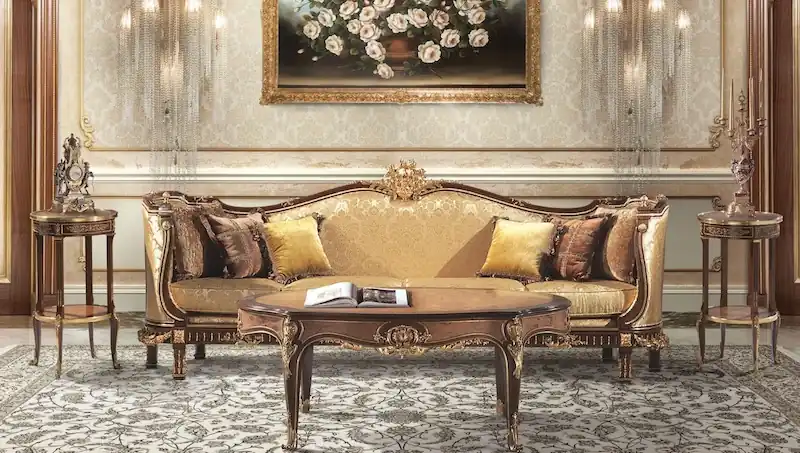
This largely explains the factory’s approach to developing new models. The work began not with a designer’s sketch, but with the study of archival materials, museum exhibits, antique drawings and surviving pieces of furniture. The craftsmen then adapted historical forms to modern requirements of comfort and production technology. This approach required considerably more time than creating an entirely new design, but it was precisely thanks to this that Angelo Cappellini furniture was never perceived as theatrical scenery or a “classic-style” imitation.
The factory has always paid special attention to materials. Production used solid precious wood species, natural veneer, hand carving, traditional gilding and finishing techniques. Many operations are still carried out by hand, as the work of an experienced craftsman cannot be replaced by modern equipment. A machine can ensure perfect precision, but it cannot reproduce the character of hand carving or the nuances of multi-layer polishing that make each piece slightly individual.
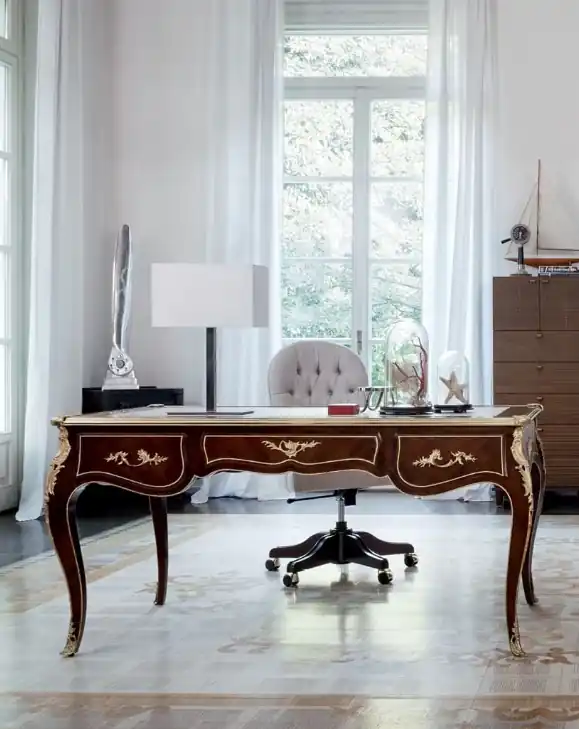
This is why Angelo Cappellini furniture rarely becomes an impulse purchase. As a rule, people come to it gradually. First, they learn to distinguish styles, begin to understand proportions and pay attention to the quality of craftsmanship; only then do they start to see the details that distinguish truly historic classic style from its many interpretations.
I clearly remember how Russian buyers’ perception of this factory changed. In the mid-nineties, the most eye-catching models with a large number of decorative elements tended to attract the most attention. But by the beginning of the 2000s, the situation had changed. More and more clients were asking to see furniture that looked not merely expensive, but refined. It was then that Angelo Cappellini became one of the factories in which interest was growing particularly rapidly. I myself had occasion to visit it quite often, and each time the same impression arose: they never tried to adapt to the market here. On the contrary, the factory patiently waited for the market itself to come to understand the kind of classic style it had been creating for decades.
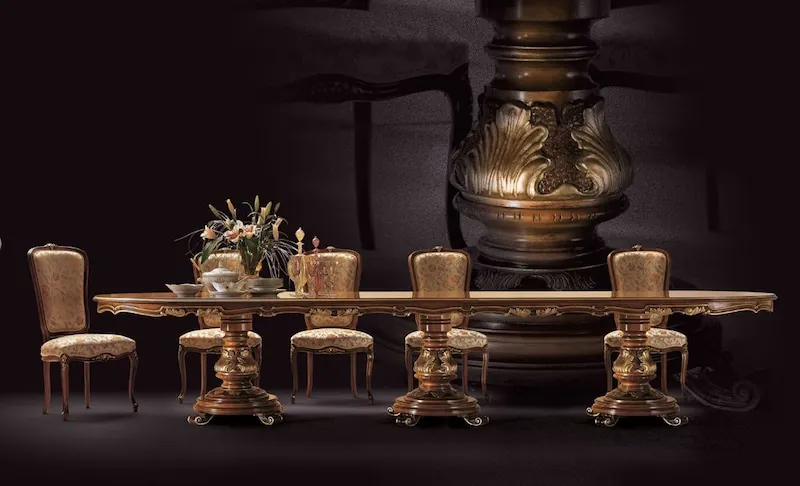
In my opinion, this is one of the main reasons for its longevity. Over nearly a century and a half of its existence, the company has survived wars, economic crises, generational changes and radical shifts in interior design trends. Yet it has not abandoned its core idea—to create furniture that will remain relevant not for a few seasons, but for several decades.
In addition to historical accuracy, the factory has other distinguishing features that its competitors do not offer. The company uses more than 60 wood finish options—from lacquer finishes to gold and silver leaf (foglia oro e argento)—and remains the only one of the three factories to systematically use gilding on furniture. Intaglio (carving) and intarsio (inlay) have been elevated here to the level of art: the master carver joins the details in such a way that the décor looks seamless, as if carved from a single piece of wood, while a five-axis pantograph is used for complex elements, not to replace but to complement the craftsman’s hand, ensuring millimetre precision. Angelo Cappellini also works with marble and precious stones in finishing—neither Smania nor Formitalia does this on such a scale. The work of the founder, Enrico Cappellini, was continued by his grandson, Angelo Cappellini, who transformed the family workshop into an internationally recognised brand: today, the catalogue includes more than two thousand items—living rooms, bedrooms, dining rooms, studies, panels and kitchens in the finest classic French styles. Since 2010, the company has also been developing a contemporary design direction under its own brand, Opera Contemporary, combining technological and design innovations with tradition.
Angelo Cappellini is the choice of antique collectors seeking contemporary reproductions of historical masterpieces, connoisseurs of classic luxury with gold and silver accents, and clients for whom uniqueness and the possibility of a fully bespoke order are important. This is not the brand to choose for minimalism or deliberately contemporary design.
Smania. Luxury without historical references
1967, Venice (Cazzago di Pianiga) | Founder: Alberto Smania | Style: Classic and neoclassical haute couture
By the end of the 20th century, Italian furniture was no longer divided simply into classic and contemporary. A new category of buyers had emerged: they appreciated the quality of traditional Italian craftsmanship, but did not want to live among reproductions of 18th-century palace interiors. It was for them that Smania offered an entirely different view of luxury.
The factory was founded in 1967 by Alberto Smania near Venice. Before that, he had served in the Italian Air Force and competed professionally in motorsport, while opening his first workshop as a manufacturer of artistic metalwork. It was metalworking that later became one of the distinctive features of Smania furniture. Unlike most manufacturers of the time, the company immediately began combining wood, natural leather, brass, bronze and stone, creating interiors that could not be classified as either classic or modernist.
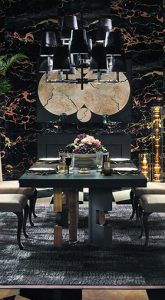
In the late 1990s and early 2000s, this approach became especially sought-after. The world was gradually moving away from heavy classic interiors. Buyers still wanted to see expensive materials and hand craftsmanship, but no longer sought to recreate historical palaces. Smania offered an alternative—furniture in which luxury was expressed not through the amount of décor, but through the quality of materials, the complexity of execution and attention to detail.
Leather has always played a special role in the factory’s philosophy. It was used not only for upholstering armchairs and sofas. Leather was also used to finish desks, panels, cabinet doors and even architectural elements of the interior. This made the space feel cohesive, while the furniture became part of the overall composition.
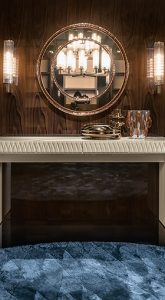
My first encounter with Smania is connected with a story I still remember well. At Salone del Mobile 2003, the factory presented a study that immediately became one of the exhibition’s most talked-about displays. Behind the desk stood a large concave wall, entirely upholstered in natural leather. It was not just a beautiful interior — it created a truly unique atmosphere that made you want to linger.
Visitors were constantly gathering around the stand. Almost everyone wanted to take a photo at that desk. What surprised me then was the attitude of the factory’s staff. They did not restrict anyone; they calmly invited people to step inside, sit in an armchair and experience the space. Today, such an approach seems natural, but twenty years ago many brands carefully guarded their displays. At Smania, on the contrary, they understood that the best way to tell people about their furniture was to let them experience the interior themselves, even if only for a few minutes.
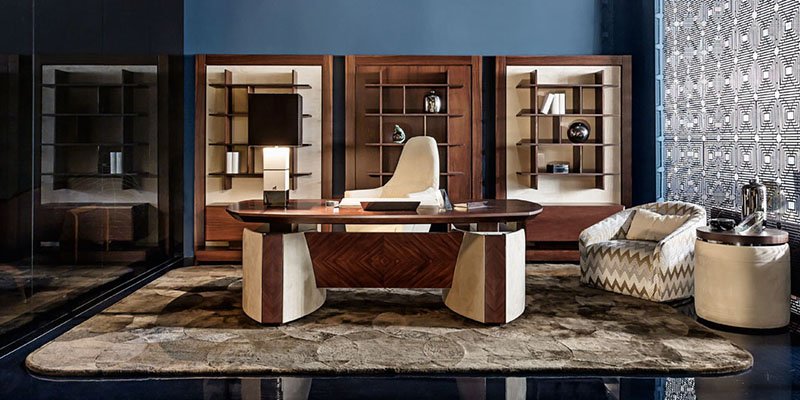
Later, when visiting the factory, I became convinced that it was no coincidence. The company has always given the impression of an open family business, where people talked much more about the quality of materials and new ideas than about marketing. Perhaps that is precisely why Smania furniture remains recognisable today. It does not copy historical styles or chase fashion, but continues to develop its own design language, which cannot be mistaken for that of any other factory.
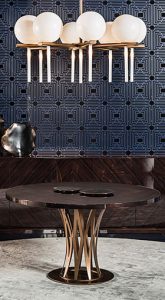
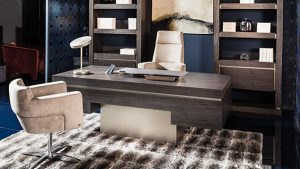
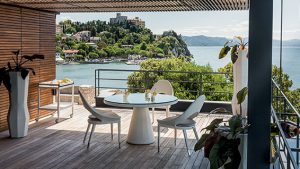
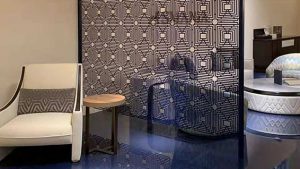
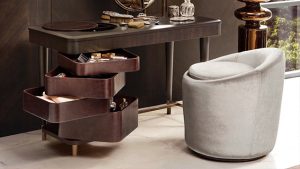
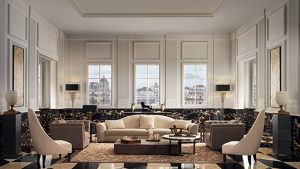
Smania also has other distinguishing features that its competitors lack. Around 90% of its products are exported — the company operates in more than 50 countries, including Russia, Ukraine, the Middle East and China, remaining the most international brand of the three. The legendary Marango collection, created by Alberto Smania in the late 1960s, with woven leather on the corners, solid walnut, brass profiles and cane detailing, is now offered at auctions as an example of Venetian craftsmanship. Just five years after its founding, in 1972, the company first presented its furniture at Salone del Mobile in Milan, which launched its international recognition — while Smania deliberately rejected full industrialisation, preserving the artisanal nature of production as part of its philosophy: “the most modern among the classics, the most classic among the modern.”
Smania is the choice of those who value craftsmanship without industrial methods, want exclusivity because every piece here is unique, and love Venetian elegance with attention to detail. Those looking for contemporary minimalism or exotic materials should consider other factories.
Formitalia. When furniture began to resemble a luxury car
1968, Tuscany (Quarrata, Pistoia) | Founder: Graziano Overi | Management: Davide and Gianni Overi | Style: Contemporary luxury
If Angelo Cappellini represents classic Italy and Smania a contemporary interpretation of luxury, Formitalia chose an entirely different path from the very beginning.
The factory was founded in Florence in 1968 and focused on high-end contemporary furniture. Even its first collections reflected a desire to combine Italian craftsmanship with new technologies for working leather, metal and wood. Instead of historical forms, it used clean geometry, expressive volumes and materials that had previously been more commonly found in the automotive industry than in furniture manufacturing.
Later, this very approach led the company to collaborate with global automotive brands. Collections created together with manufacturers of supercars and luxury automobiles became a natural continuation of Formitalia’s philosophy. They used the same types of leather, similar finishing techniques and the attention to detail traditionally associated with Italian coachbuilders.
My acquaintance with the factory began in 2001. At the time, I came for negotiations with Davide Overi. We discussed the first major furniture delivery for the “Adamant” showroom chain. The order included an entire truckload of upholstered furniture, although the range consisted of only two sofa models — I ordered and paid for the entire batch. It was a deliberate decision: instead of buying small quantities from different collections, we chose the models we were confident in. For ten stores, this proved to be the better strategy.
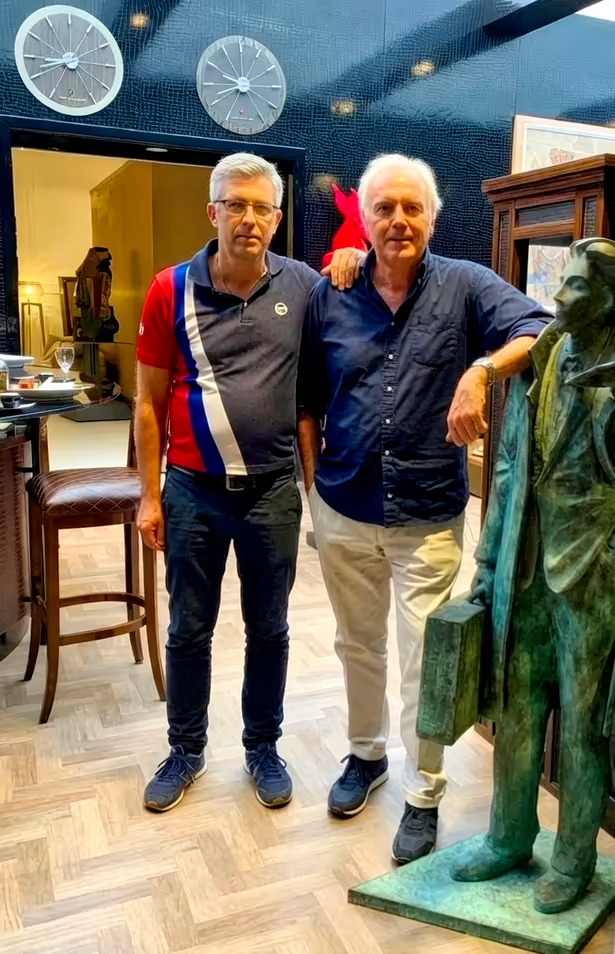
The result confirmed the soundness of this approach. The sofas sold out very quickly, after which our cooperation with the factory became regular. It was then that I understood one important characteristic of Formitalia. Behind the striking design was a highly disciplined company that paid great attention not only to developing new collections but also to consistent quality. For a dealer, this is no less important than the appearance of the furniture.
I still have a photograph taken during that meeting at Davide Overi’s table. Today, it is already perceived as part of history. Back then, no one imagined that several decades later Formitalia would become one of the world’s best-known manufacturers of contemporary luxury furniture. For us, it was first and foremost a family-run factory we wanted to work with, because its owners knew how to listen to their partners and were ready to build long-term relationships.
It is precisely this, it seems to me, that distinguishes many successful Italian companies. They sell more than just furniture. They create trust. And once trust has been established, it often proves to be the most valuable asset of a family business.
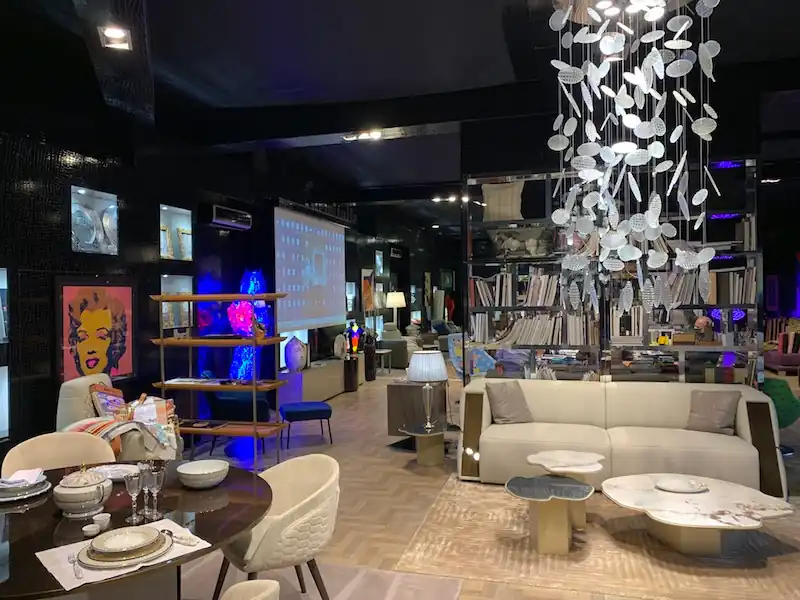
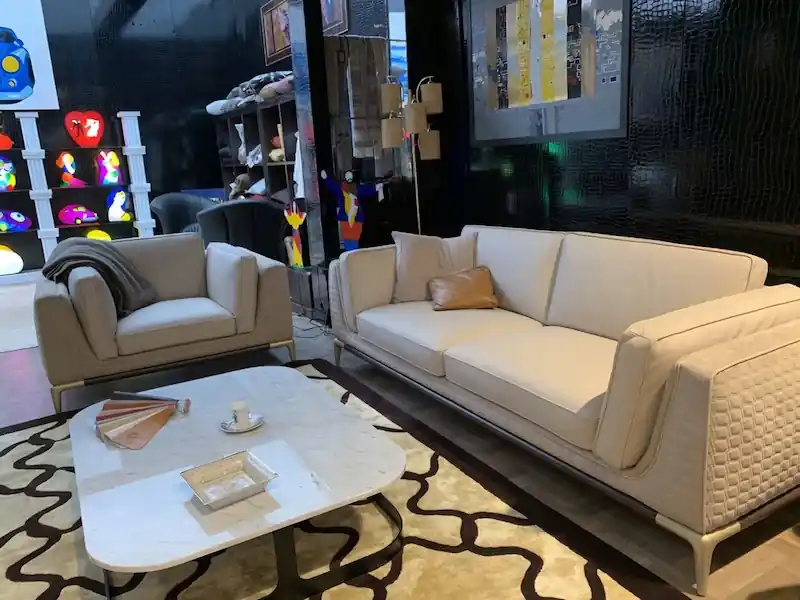
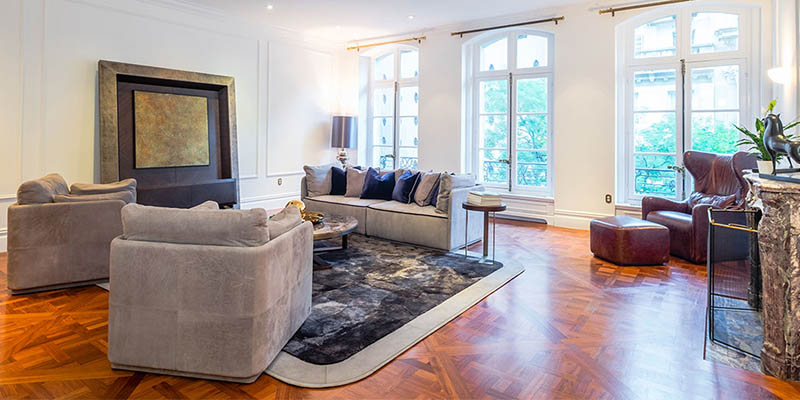
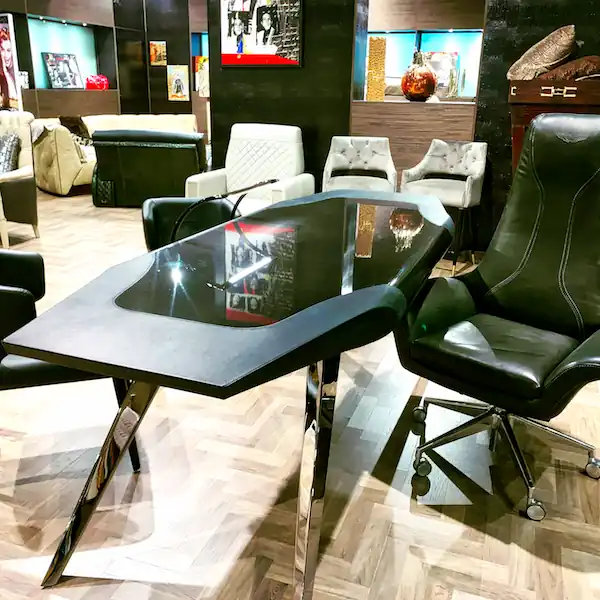
Formitalia living rooms and lounge areas

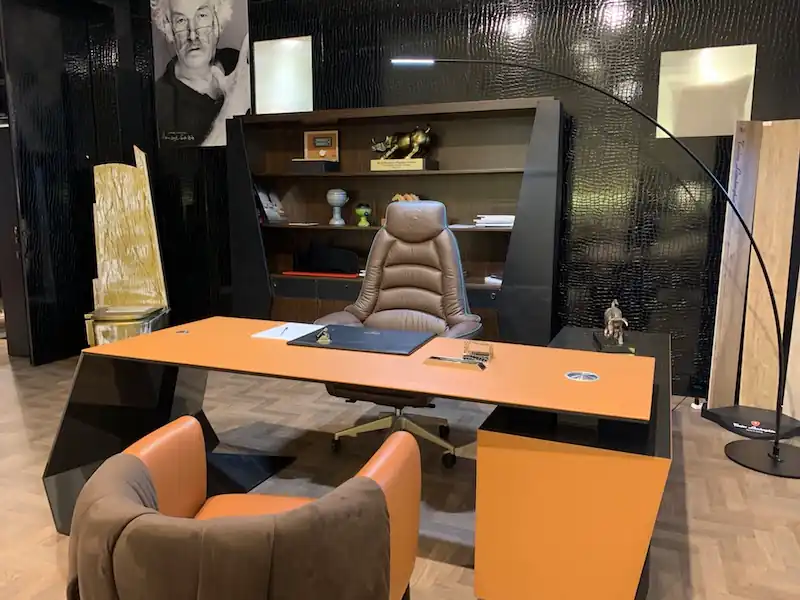
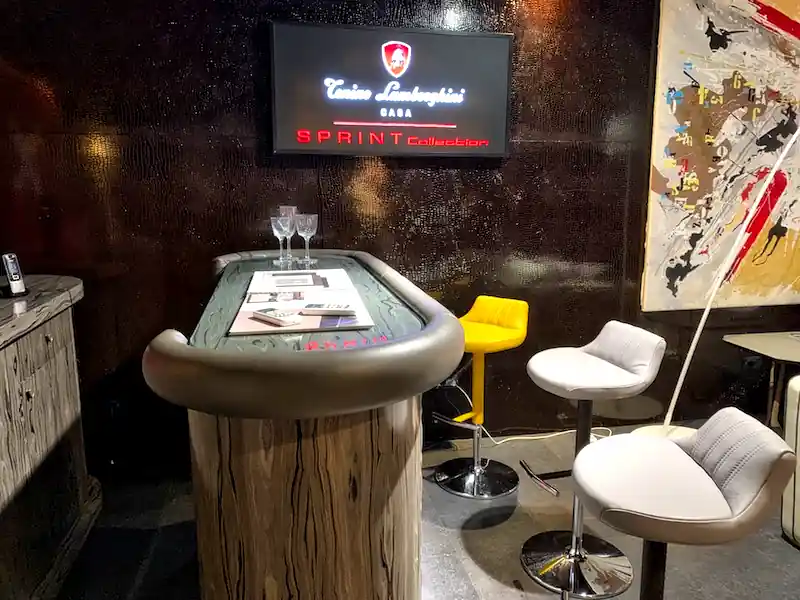
Studies and collaboration with Lamborghini
Bedrooms, décor and home cinema
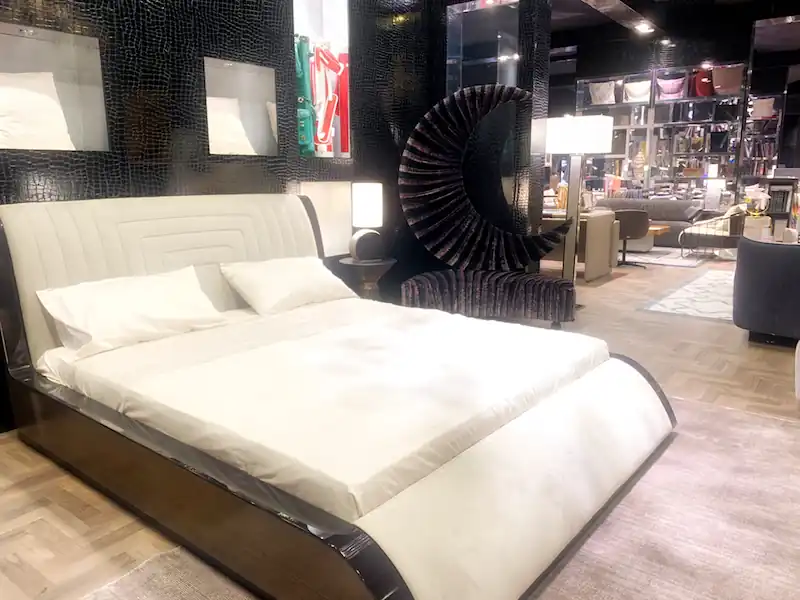
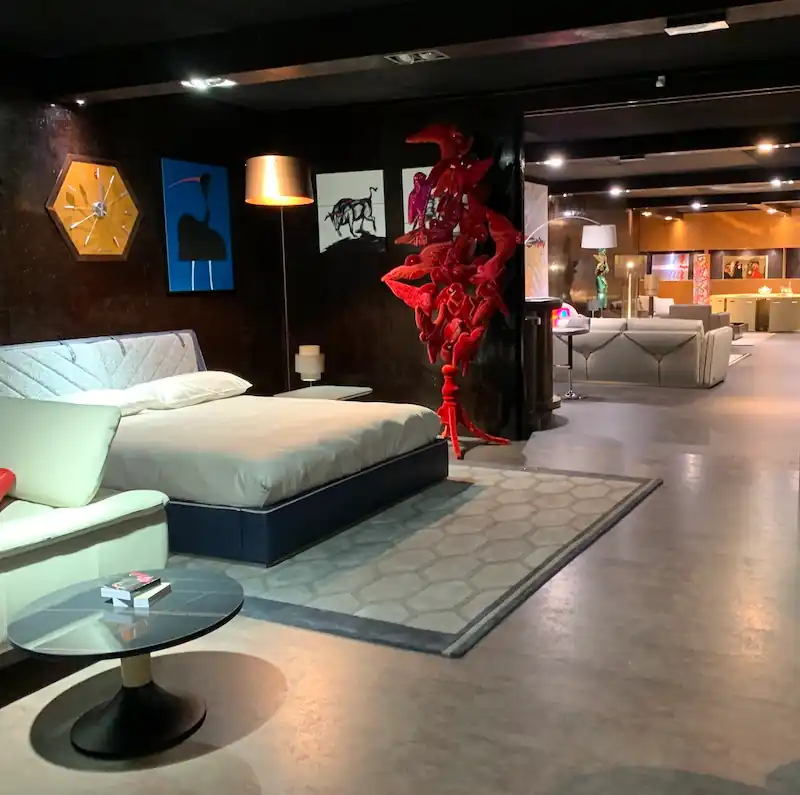
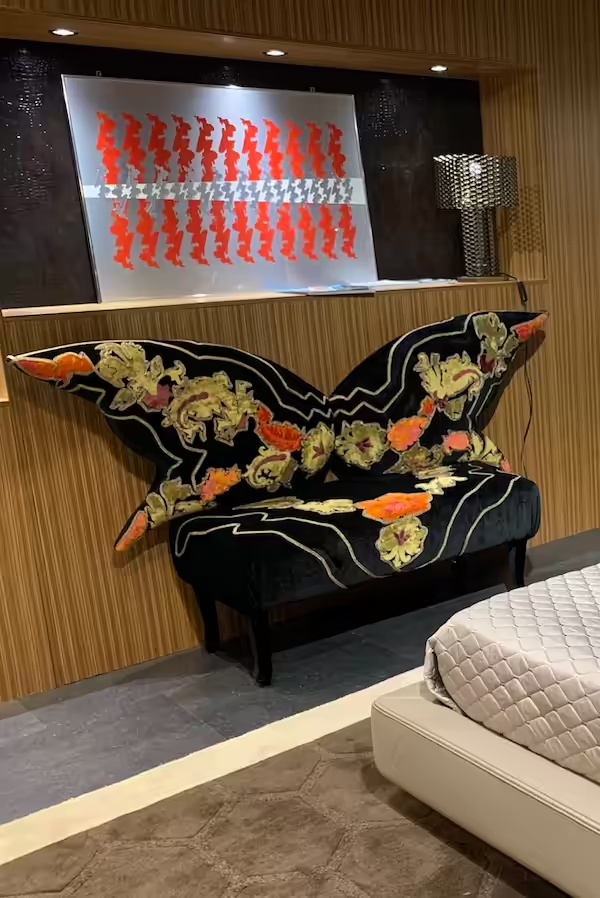
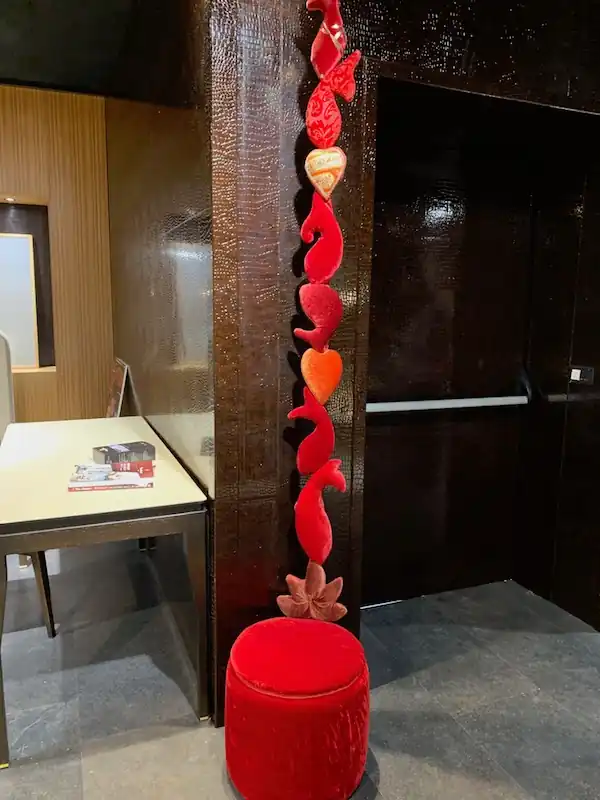
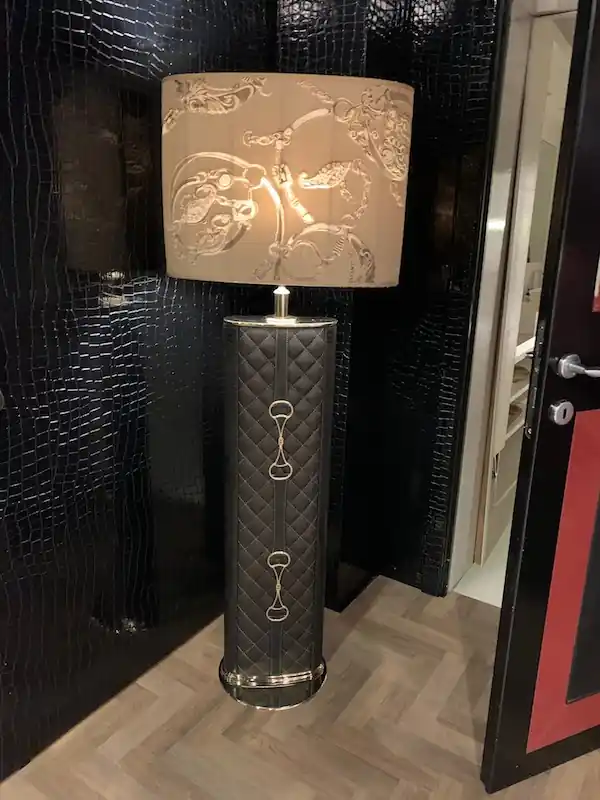
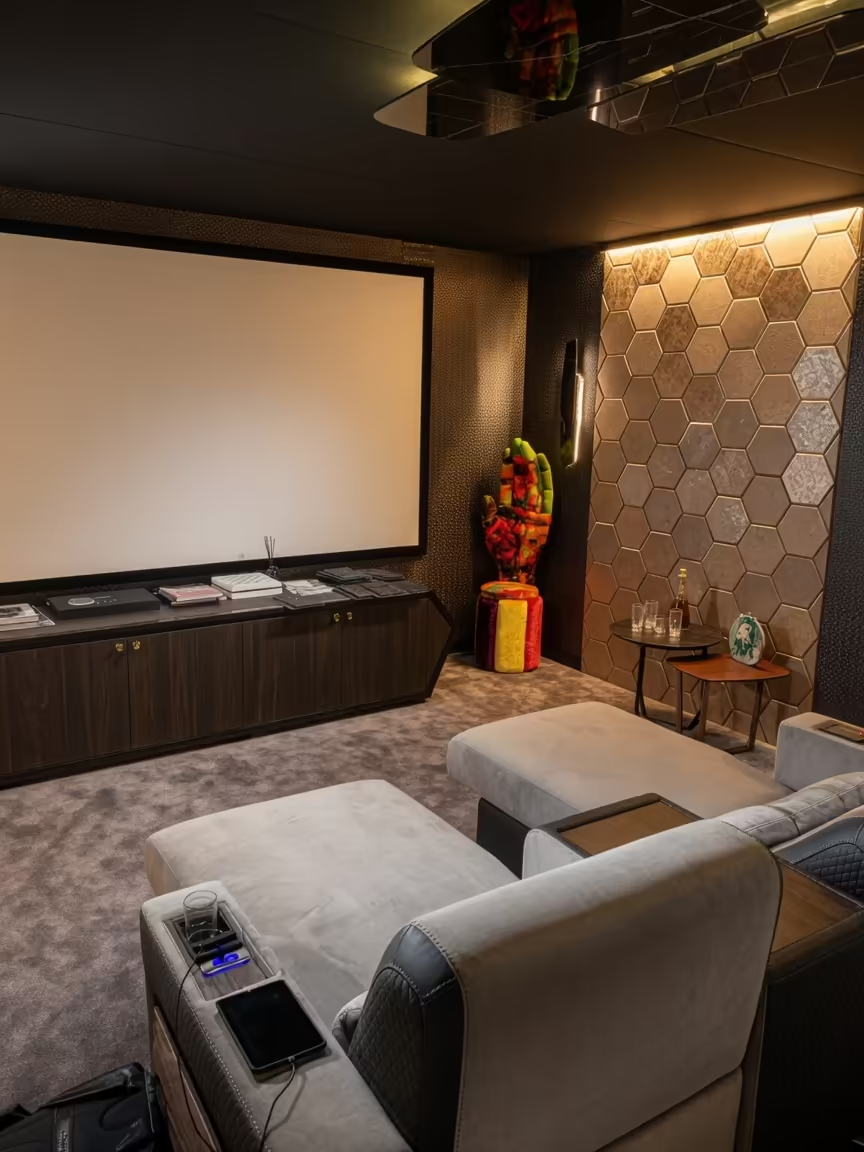
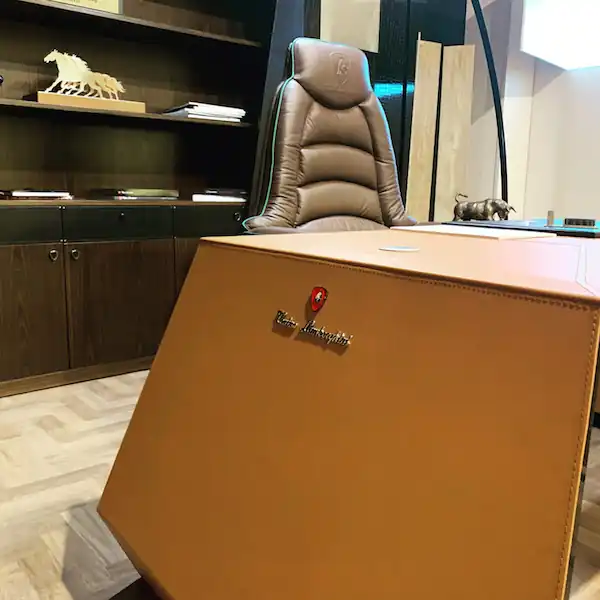
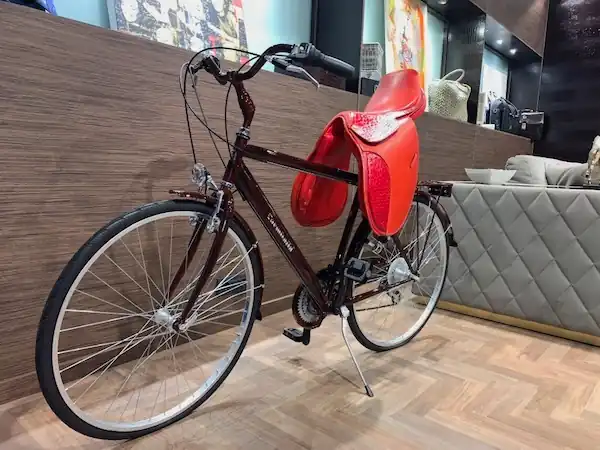
Formitalia has other distinguishing features that its competitors do not offer. Since 2005, the company has collaborated with Tonino Lamborghini — the Tonino Lamborghini Casa collection – furniture for the home and office inspired by the brand’s automotive heritage: vibrant colours, bold shapes and top-quality leather. Since 2011, it has partnered with Aston Martin (the Aston Martin Interiors collection for the home and office, including accessories and lighting), as well as holding licences with Mercedes-Benz Style and Gherardini Home — in terms of the number of licences, Formitalia surpasses both other factories. Formitalia was one of the first companies in Italy to use crocodile and ostrich leather in furniture production, collaborating with craftsmen from Santa Croce and Scandicci — Tuscany’s finest leatherworking specialists. The company’s debut line, Boutique Collection (1991), was personally designed by Paolo Gucci — former vice-president and chief designer of the Gucci house, and grandson of founder Guccio Gucci; his sculptural sofas with curved lines and matching side tables, inspired by the world of horses and silk prints of Arabian thoroughbreds from Como, defined the brand’s style (Paolo Gucci died in 1995, four years after the collection’s debut). Today, Formitalia and its licensed brands have their own distribution network, including boutiques and shop-in-shop stores, in luxury centres across more than 50 countries, including Russia.
Formitalia is the choice of those who want exotic materials such as crocodile and ostrich leather, appreciate automotive style thanks to partnerships with Lamborghini and Aston Martin, and value contemporary luxury with technological innovation. Those seeking classic style or historical reproductions may prefer Angelo Cappellini or Smania.
Comparison table: what the customer chooses and why
| Criterion | Angelo Cappellini | Smania | Formitalia |
|---|---|---|---|
| Year founded | 1886 | 1967 | 1968 |
| Founder | Enrico Cappellini | Alberto Smania (Fiat rally driver) | Graziano Oferi |
| Region | Brianza (Cabiate) | Venice (Cazzago di Pianiga) | Tuscany (Quarrata) |
| Style | Historical classicism | Venetian haute couture | Contemporary luxury |
| Unique technology | Gold leaf, intarsio, marble | Handcrafted haute couture, Marango collection | Crocodile leather, ostrich leather |
| Partnerships | No automotive brands | No automotive brands | Tonino Lamborghini (since 2005), Aston Martin (since 2011) |
| Export | International | 90% of products | 50+ countries, boutiques |
| Target client | Collectors, history enthusiasts | Connoisseurs of craftsmanship and exclusivity | Lovers of exoticism and automotive style |
Which factory to choose: specific scenarios
Choose Angelo Cappellini if you want replicas of historical masterpieces with museum-quality precision, appreciate gold and silver accents, seek marble and precious stones in the finishes, and prefer classic luxury without compromise.
Choose Smania if you want Venetian haute couture in furniture, appreciate craftsmanship without industrial technologies, seek designer collections such as Marango, and prefer a personalised approach and exclusivity.
Choose Formitalia if you want exotic materials (crocodile, ostrich), appreciate automotive style and partnerships with Lamborghini/Aston Martin, seek contemporary luxury with technological innovations, and prefer an international brand with a network of boutiques.
FAQ: frequently asked questions
How does Angelo Cappellini handcrafted furniture differ from Smania?
Angelo Cappellini recreates historical masterpieces using gold leaf and marble, while Smania creates new classics in haute couture style with an emphasis on craftsmanship. Angelo Cappellini uses technology to accurately reproduce historical originals, while Smania emphasizes the uniqueness of each piece without mass production.
Why is Formitalia more expensive than others?
Formitalia uses exotic materials (crocodile and ostrich leather), which are up to 10 times more expensive than traditional leather. In addition, the brand has exclusive licensing agreements with Tonino Lamborghini and Aston Martin, adding prestige and value.
How long will I have to wait for my order?
Angelo Cappellini: 12–16 weeks (intricate hand carving and inlay work). Smania: 10–14 weeks (haute couture craftsmanship). Formitalia: 8–12 weeks (the use of exotic materials requires time for ordering). Please confirm exact lead times with your manager — as an official dealer in Russia, we help track the status of your order.
Can I see samples of exotic leather before placing an order?
Yes. Our showroom features samples of crocodile and ostrich leather by Formitalia, wood samples with gold leaf by Angelo Cappellini, and unique fabrics by Smania—allowing you to assess the quality of the materials before placing an order.
Ready to choose the perfect furniture? Also explore the catalogue of Italian kitchens and other materials in the Mebeltour blogor contact us as an official dealer in Russia.
Sources: verified Italian and international sources
Angelo Cappellini:
Official website: angelocappellini.com — 60+ finish options, gold leaf, intarsio. Press release: ogscommunication.com/308492-angelo-cappellini-ita — Marchio Storico di Interesse Nazionale (2023). Production: angelocappellini.com/produzione-angelo-cappellini — five-axis pantograph, hand carving. Company history: angelocappellini.com/storia-azienda-angelo-cappellini — founded in 1886, continuity across generations, 2000+ references. Opera Contemporary: design.pambianconews.com — international expansion since 2010.
Smania:
Official website: smania.it — history, Alberto Smania. Archello: archello.com/brand/smania — Air Force captain, Fiat rally driver. Archilovers: archilovers.com/teams/652709/smania — 90% exports, debut at Salone del Mobile in 1972, brand philosophy. Pamono: pamono.it/cassettiera-marango — Marango collection.
Formitalia:
Official website: formitalia.it — partnerships, collections. LuxWorldFurnishing: luxworldfurnishing.com/formitalia — Tonino Lamborghini (2005), Aston Martin (2011). Noi di Qua: noidiqua.it/formitalia-uneccellenza-parte-quarrata — exotic leather, Tuscan craftsmen. RealEstateDesignForum: realestatedesignforum.it/company/formitalia — boutiques in 50+ countries. Tuscan Collections: tuscancollections.it/aziende/formitalia — founded in 1968, Graziano Overi, Boutique Collection 1991 designed by Paolo Gucci. 1stDibs (archive of Paolo Gucci furniture designs for Formitalia): 1stdibs.com/creators/paolo-gucci/furniture. Paolo Gucci — biographical note: en.wikipedia.org/wiki/Paolo_Gucci — years of life 1931–1995, vice president and chief designer of Gucci.